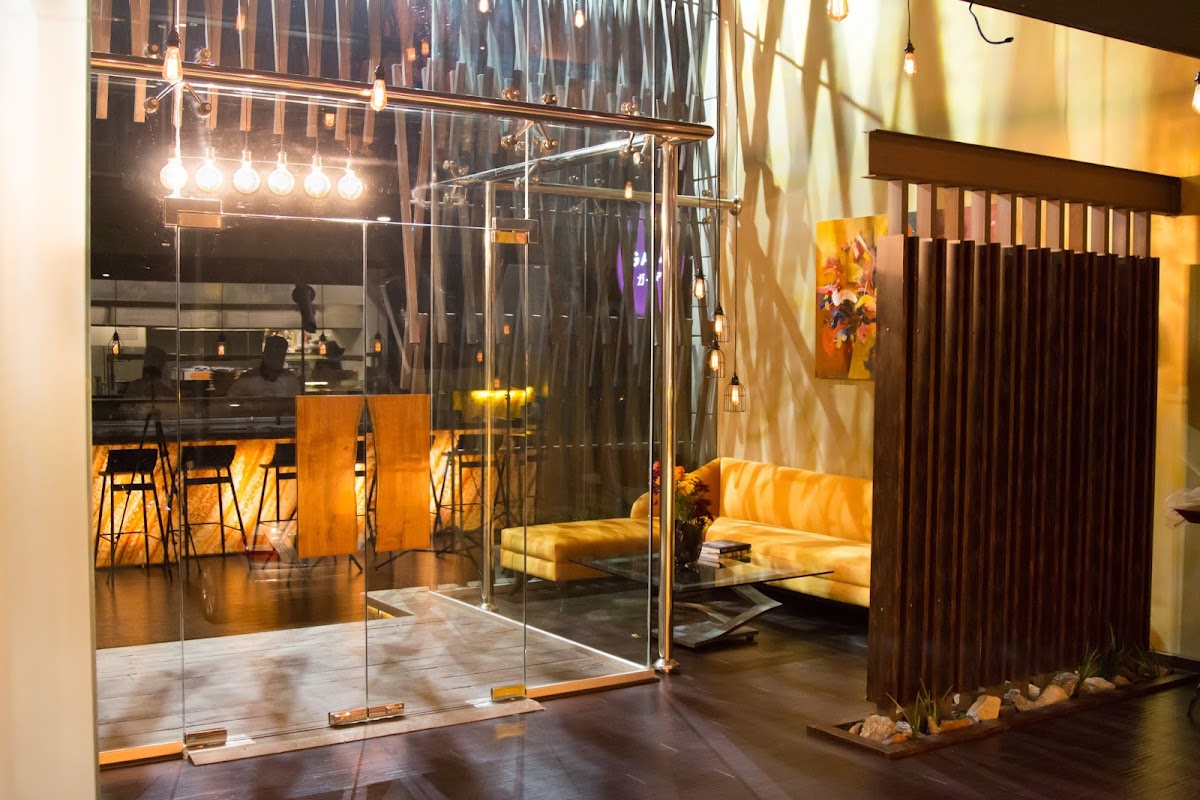
Gaia Japanese Fusion Restaurant in Lahore has garnered a reputation for its innovative approach to Japanese cuisine. Reviewers often praise the restaurant for its fresh, high-quality ingredients and creative fusion dishes that blend traditional Japanese flavors with contemporary twists. Popular menu items include sushi rolls, ramen, and a variety of appetizers. The restaurant's modern and stylish ambiance adds to the dining experience, making it a popular choice for both casual and special occasions. While the food quality is frequently highlighted as a strong point, some diners have mentioned that the prices can be on the higher side. Overall, Gaia is well-regarded for its unique take on Japanese cuisine and its appealing dining environment. They need to increase the lighting ambiance for this place at might, becomes too dark.
Overview
Walking into Gai’A Japanese Fusion feels a bit like stepping out of Lahore for a moment and landing somewhere between Tokyo and a modern Asian bistro. The location at CCA, 142, Sector C Phase 5 D.H.A, Lahore, 54810, Pakistan is easy to reach, especially if you already spend time around DHA, and that convenience shows up again and again in local reviews that praise both access and consistency. I first visited on a weekday evening after a long workday, expecting decent food and a calm vibe, and ended up staying longer than planned because the experience felt thoughtfully put together from start to finish.
The menu leans heavily into Japanese-inspired dishes while borrowing confidently from other Asian kitchens. Sushi rolls are clearly the star, but not in a copy-paste way. The rice is seasoned lightly, which aligns with traditional Japanese techniques described by culinary institutes like the Tokyo Sushi Academy, and the fish-to-rice ratio feels intentional rather than oversized. During one visit, I watched the chefs assemble rolls with the kind of repetition and precision that usually comes from formal training, not guesswork. That attention shows up in texture, especially in tempura rolls where the crunch holds without getting greasy.
Beyond sushi, the hot kitchen deserves real credit. Ramen bowls come out with broth that’s been simmered long enough to build depth, something food science research often links to the slow extraction of amino acids for umami flavor. You can taste it here. The noodles have bounce, the toppings are balanced, and nothing feels rushed. A server once mentioned that certain broths are prepped hours before service, which explains why they taste developed instead of flat. That kind of process matters, and it’s something seasoned diners usually pick up on quickly.
What makes the experience approachable is how the staff explains the menu without sounding rehearsed. On my second visit, I asked about a fusion entrée that blended Japanese seasoning with a Korean-style glaze, and the explanation actually helped me understand how the flavors would land. That level of clarity builds trust, especially for diners who may not be deeply familiar with Japanese cuisine. According to global dining reports by organizations like the World Food Travel Association, transparency and staff knowledge strongly influence repeat visits, and this place clearly benefits from that principle.
The atmosphere supports the food instead of competing with it. Lighting is warm, tables are spaced comfortably, and the overall design works well for both casual dinners and small group meetups. It’s not trying to be a fine-dining temple, but it also doesn’t feel like fast casual. That middle ground is probably why reviews often mention it as a reliable spot for birthdays, relaxed business meals, or low-key weekend plans.
Pricing stays reasonable for the quality, which is another reason it keeps showing up in word-of-mouth recommendations. Portions are satisfying without being excessive, and sharing a few plates across the table feels natural. One limitation worth noting is that peak hours can mean a short wait, especially on weekends, and parking in the area can get tight. Still, most regulars seem to agree that the wait is manageable and the payoff is worth it.
Across multiple visits, what stands out most is consistency. Flavors don’t swing wildly from one day to the next, and service stays steady even when the dining room is full. For a restaurant blending traditional Japanese methods with modern fusion ideas, that balance is not easy to maintain. Yet here, it feels intentional, practiced, and reliable, which is exactly why it continues to earn strong local reviews and repeat customers.
Good to know
From the business
✓ Identifies as women-ownedService options
✓ Outdoor seating ✓ Takeaway ✓ Dine-inHighlights
✓ Fireplace ✓ Great dessert ✓ Great tea selection ✓ Rooftop seatingPopular for
✓ Lunch ✓ Dinner ✓ Solo diningAccessibility
✓ Wheelchair-accessible toilet ✓ Wheelchair-accessible entranceOfferings
✓ Coffee ✓ Halal food ✓ Late-night food ✓ Small plates ✓ Vegan options ✓ Vegetarian optionsDining options
✓ Lunch ✓ Dinner ✓ Catering ✓ Dessert ✓ Seating ✓ Table serviceAmenities
✓ Gender-neutral toilets ✓ Toilet ✓ Wi-Fi ✓ Wi-FiAtmosphere
✓ Cosy ✓ Quiet ✓ Romantic ✓ Trendy ✓ UpmarketCrowd
✓ Family friendly ✓ Groups ✓ TouristsPlanning
✓ Reservations required ✓ Dinner reservations recommended ✓ Accepts reservationsPayments
✓ Credit cards ✓ Debit cards ✓ NFC mobile payments ✓ Credit cardsChildren
✓ High chairsParking
✓ Free of charge street parking ✓ Free parking lotPhotos
Location
Reviews
Whenever I visit Gai’a for sushi and delicious food, I'm always delighted. It never fails to impress me, especially with their sushi, which I absolutely love. However, I believe they could improve by enhancing the sizes of their portions. Overall, it's always a fantastic experience dining there, but a bit more food would make it even better.
Food was alright not that much good like it used to be before. Waiters attitude is weird. They dont listen to you at all. Atmosphere is totally off over here. Didn’t like the vibe. People who are coming here are smoking non stop and having a negative vibe.
Delicious, food taste and quality amazing, attentive service, what else could you ask for One of my favourite restaurants, will be back on my next visit
Great Japanese restaurant in my beautiful city Lahore, Food is very yummy, Environment for all is great, Rates r little bit high, Staff is 50/50, Parking area is safe....
It is a Japanese fine dining restaurant which offers delicious food. They have a variety of dishes to satisfy every taste bud. If you’re a fan of Japanese food you must visit this place to try out the dishes they have to offer. They also serve a variety of drinks.